


Transit Funding Measure Bill Reaches Governor Newsom’s Desk
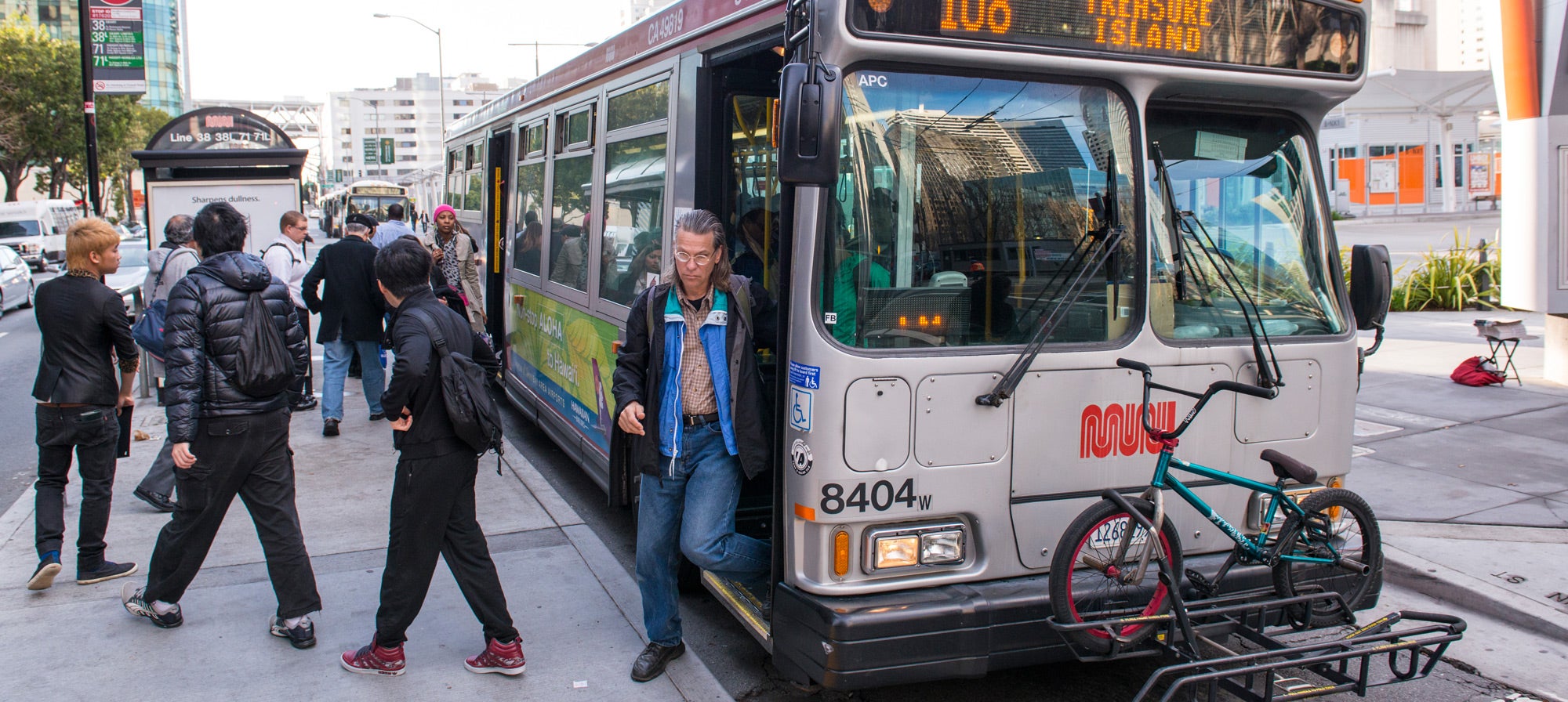
After years of discussion and analysis, hundreds of hours of public meetings and down-to-the-wire negotiations, Senate Bill 63 — the authorizing legislation for a November 2026 ballot measure to sustain and improve public transit in the Bay Area — is headed to Governor Newsom’s desk. The bill passed the Assembly by 46-20 (with 14 members not voting) and 29-8 (with 3 members not voting).
Securing passage of SB 63 was MTC’s top legislative priority this year. The final bill, which was introduced by state senators Scott Wiener of San Francisco and Jesse Arreguín of Berkeley, and co-authored by Assemblymembers Mia Bonta of Alameda County, and Matt Haney and Catherine Stefani of San Francisco (plus Sen. Laura Richardson of Los Angeles County), aligns closely with MTC’s advocacy priorities on the bill, which included that the bill:
- Be passable
- Prevent major transit service cuts from regional operators
- Advance transit transformation
- Include meaningful accountability provisions
- Ensure fairness; and
- Take local transportation funding needs into account.
SB 63 authorizes placement of a 14-year regional transportation sales tax on the November 2026 ballot in Alameda, Contra Costa, San Francisco, San Mateo and Santa Clara counties. The measure — which would include a half-cent sales tax in Alameda, Contra Costa, San Mateo and Santa Clara counties and up to a one-cent sales tax in San Francisco — would generate approximately $1 billion annually across the five counties. SB 63 allows the measure to be placed on the ballot either through action by a newly formed Public Transit Revenue Measure District (governed by the same board as MTC) or via a citizen’s initiative.
Approximately 60 percent of the revenue that would be raised by voters’ approval of the measure is dedicated to BART, Muni, Caltrain, AC Transit, San Francisco Bay Ferry and smaller transit agencies providing service in the five counties to keep buses, trains and ferries moving. About one-third is guaranteed to Santa Clara VTA, SamTrans, the Alameda County Transportation Commission and the Contra Costa Transportation Authority, with flexibility to use funds for transit capital, operations, or road paving projects on roads with regular bus service.
The bill includes a detailed expenditure plan that prescribes the share of annual funding to be provided to each recipient and to MTC for rider-focused transit improvements (fare-affordability programs, including Clipper® START and free and reduced-cost transfers, accessibility improvements, mapping and wayfinding and transit priority projects and programs). Below is an estimate of funding amounts based on a forecast for fiscal year 2031 provided by Sen. Wiener’s and Sen. Arreguin’s offices.
Public Transportation Revenue Measure Expenditure Plan
Annual Funding Estimate by Recipient
| Fund Recipient/Purpose | Fiscal Year 2031 Estimate* ($ in millions) |
|---|---|
| BART operations | $330 |
| Santa Clara Valley Transportation Authority (VTA) transit capital, operating and repaving streets with bus routes** | $264 |
| San Francisco Municipal Transportation Agency operations | $170 |
| Caltrain operations | $75 |
| AC Transit operations | $51 |
| SamTrans transit capital, operating and repaving streets with bus routes** | $50 |
| Other agency operations [SF Bay Ferry, County Connection, WestCAT, Tri Delta Transit, Livermore Amador Valley Transit Authority (Wheels), Union City Transit] | $29 |
| Contra Costa Transportation Authority (CCTA) transit capital, operating and repaving streets with bus routes** | $26.5 |
| Alameda County Transportation Commission (ACTC) transit capital, operating and repaving streets with bus routes** | $10.3 |
| Transit rider-focused improvement programs through MTC** | $46.4 |
| Public Transit Revenue Measure District Administration | $2.3 |
| Total | $1,054.5 |
What does SB 63 mean for Bay Area Residents?
Bay Area transit riders take more than 1 million trips each day, with over 80 percent of these trips on BART, Muni, Caltrain or AC Transit. Riders include tens of thousands of K-10 students, seniors, people with disabilities, and low-income residents who can’t afford to own a car.
The Bay Area’s $1.2 trillion economy depends on a well-functioning transit system. Even a small shift of transit riders to solo driving could overwhelm the region’s roadways. Research shows that just 3 percent to 5 percent fewer vehicles on the road can cut traffic delays by 50 percent to 70 percent. Thousands of workers are directly employed by transit agencies proposed to be funded through the measure, and planned transit modernization and expansion projects can create tens of thousands more jobs.
A little less than 5 percent of the funds will be dedicated to improving transit affordability, accessibility, and ease of use – priorities identified in the 2021 Bay Area Transit Transformation Action Plan. The suite of rider-focused improvements includes:
- Free and reduced-fare transfers that could save multi-agency riders up to $1,500 per year. On a regional basis, this is estimated to increase ridership by approximately 30,000 trips per day.
- Expansion of the Clipper START® program, which provides a 50% fare discount, to reach 100,000 additional low-income adults.
- Improvements to accessibility for seniors and people with disabilities
-
Transit-priority projects to make bus trips faster, and mapping and wayfinding improvements to make transit easier to use.
Accountability
- Independent Oversight Committee: The bill requires the district to establish an independent oversight committee to ensure expenditures are consistent with the statute. Membership will include at least one representative of each county in the district, appointed by each county’s board of supervisors.
- Financial efficiency requirements: BART, Muni, Caltrain and AC Transit must undergo a two-phase independent third-party financial efficiency review overseen by an Oversight Committee composed of four independent experts, four transit agency representatives, and an MTC Commissioner from within the district’s geographic boundaries (either the chair or a Commissioner appointed by the chair if the chair is not appointed from within the five counties). MTC is responsible for procuring the third-party consultant to conduct the review and for staffing the Oversight Committee. Each transit agency identifies the efficiency measures it will implement, with the Oversight Committee responsible for reviewing and approving those commitments. Funds are conditioned upon the Commission determining a transit agency’s ongoing compliance with the implementation actions.
- Maintenance of effort: BART, Muni, Caltrain, AC Transit, Golden Gate Transit, SF Bay Ferry and the bus operators in Alameda and Contra Costa counties must maintain existing levels of operations funding to ensure the measure supplements, rather than replaces, current operations support. The Commission must verify compliance before allocating funds. This provision allows for exceptions under specified circumstances, such as allowing the use of funds previously used for operations for state of good repair, subject to Commission approval.
- Enhanced Transit Agency Accountability via Ad Hoc Adjudication Committees: To ensure taxpayers in each of the district’s counties are treated fairly by BART, Muni, Caltrain and AC Transit, a county transportation agency or board of supervisors within the district’s geography may petition to establish an ad-hoc adjudication committee if a transit agency is not applying standards, policies and commitments for operations and maintenance (such as service levels, fare policy, cleanliness, maintenance, access and safety) consistently across counties or if such standards, policies or commitments disproportionately disadvantage service or state of good repair in a county without compelling justification. The committee is composed solely of representatives from counties contributing revenue measure funds to the transit agency under review. The committee’s determinations are binding and may result in withholding up to 7 percent of the transit agency’s funds. This includes an initial 3.5 percent withholding with a 90-day period for corrective action. An additional 3.5 percent may be withheld if the issue is not resolved within 90 days.
Submit your comment
In order to receive a reply to your comment, please provide an email address.