


TNC Access for All Grants
California’s transportation network company (TNC) Access for All grants aim to improve the availability and accessibility of on-demand transportation services for people with disabilities. MTC is the Bay Area’s Local Access Fund Administrator.
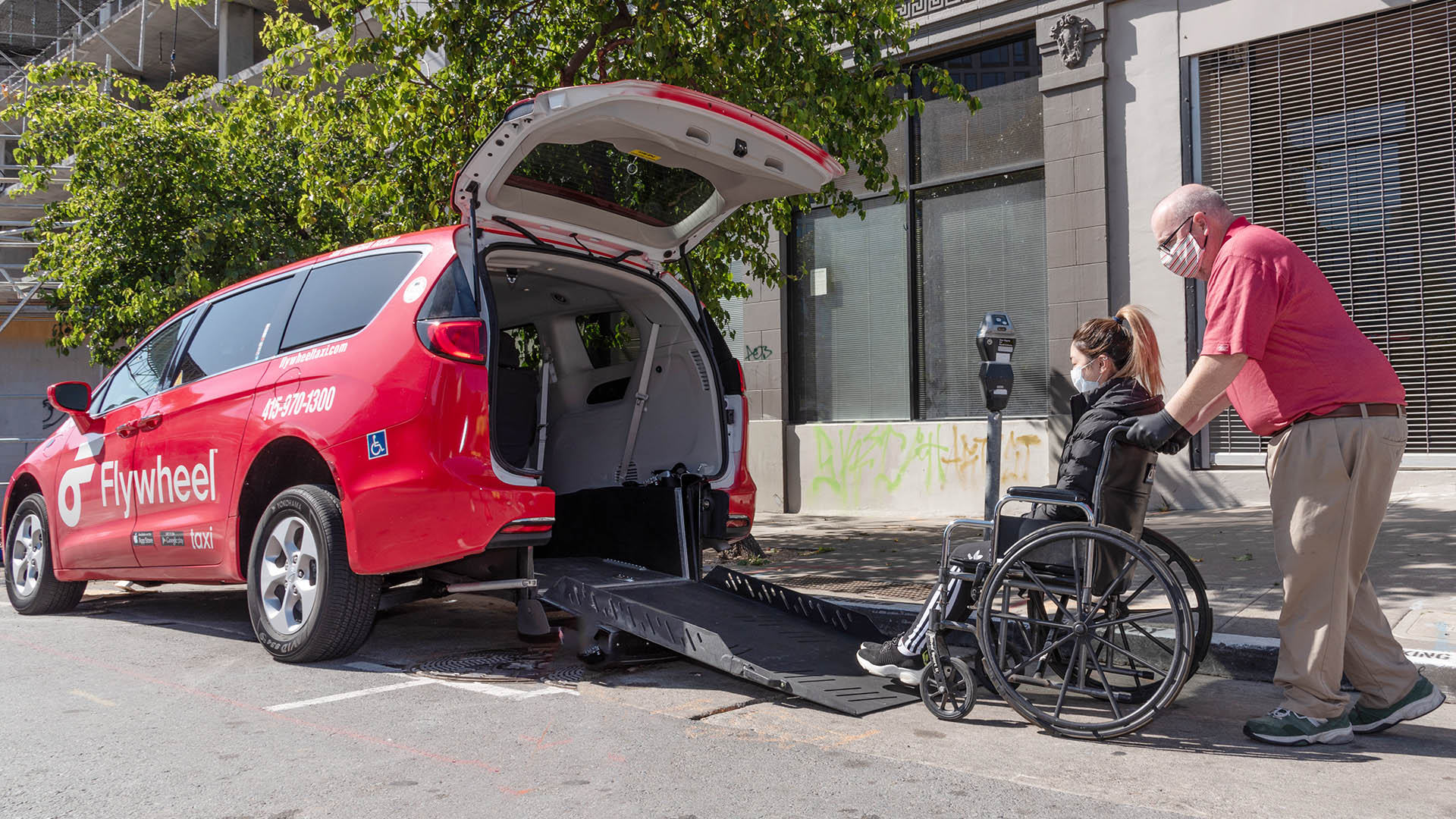
MTC serves as the Local Access Fund Administrator (LAFA) for Marin, Napa, San Mateo, Santa Clara and Sonoma counties. In this role, MTC:
- Administers program funding,
- Conducts a competitive solicitation process for eligible transportation providers, and
- Oversees program performance and reporting.
The primary goal of the program is to expand and improve on-demand transportation services for people with disabilities by increasing the availability of wheelchair-accessible vehicles, improving response times and supporting innovative transportation solutions that address local mobility needs.
Eligible Projects
Eligible projects may include operating and capital investments such as vehicle acquisition and maintenance, driver training, service incentives, outreach activities and other efforts that improve access to wheelchair-accessible transportation.
Timeline: Cycle 6 Access Provider Solicitation
Information on applications for Cycle 6 of the TNC Access for All Program for the counties of Marin, Napa, San Matero, Sana Clara and Sonoma counties will be updated in Fall 2026. MTC-administered programs will not begin service until 2027.
For more information, please visit the Access Provider Information CPUC webpage.
Staff Contact
Fabian Gallardo
Email: fgallardo@bayareametro.gov
Phone: 415-778-2145
The TNC Access for All Program was established by the California Public Utilities Commission (CPUC) as part of Senate Bill 1376 (2018) to improve the availability and accessibility of on-demand transportation services for people with disabilities, including wheelchair-accessible vehicle (WAV) service.
The program is funded through a $0.10 surcharge on transportation network company (TNC) trips (such as Uber and Lyft rides) originating in California.
Program funds are returned to the regions in which they are generated and are used to support projects that expand accessible, on-demand transportation options.