


Community Action Resource & Empowerment (CARE) Program
The Community Action Resource and Empowerment (CARE) program is a funding, technical assistance and education initiative that works toward improving transportation mobility, housing, and environment in the Bay Area. It is focused on partnerships to implement community priorities.
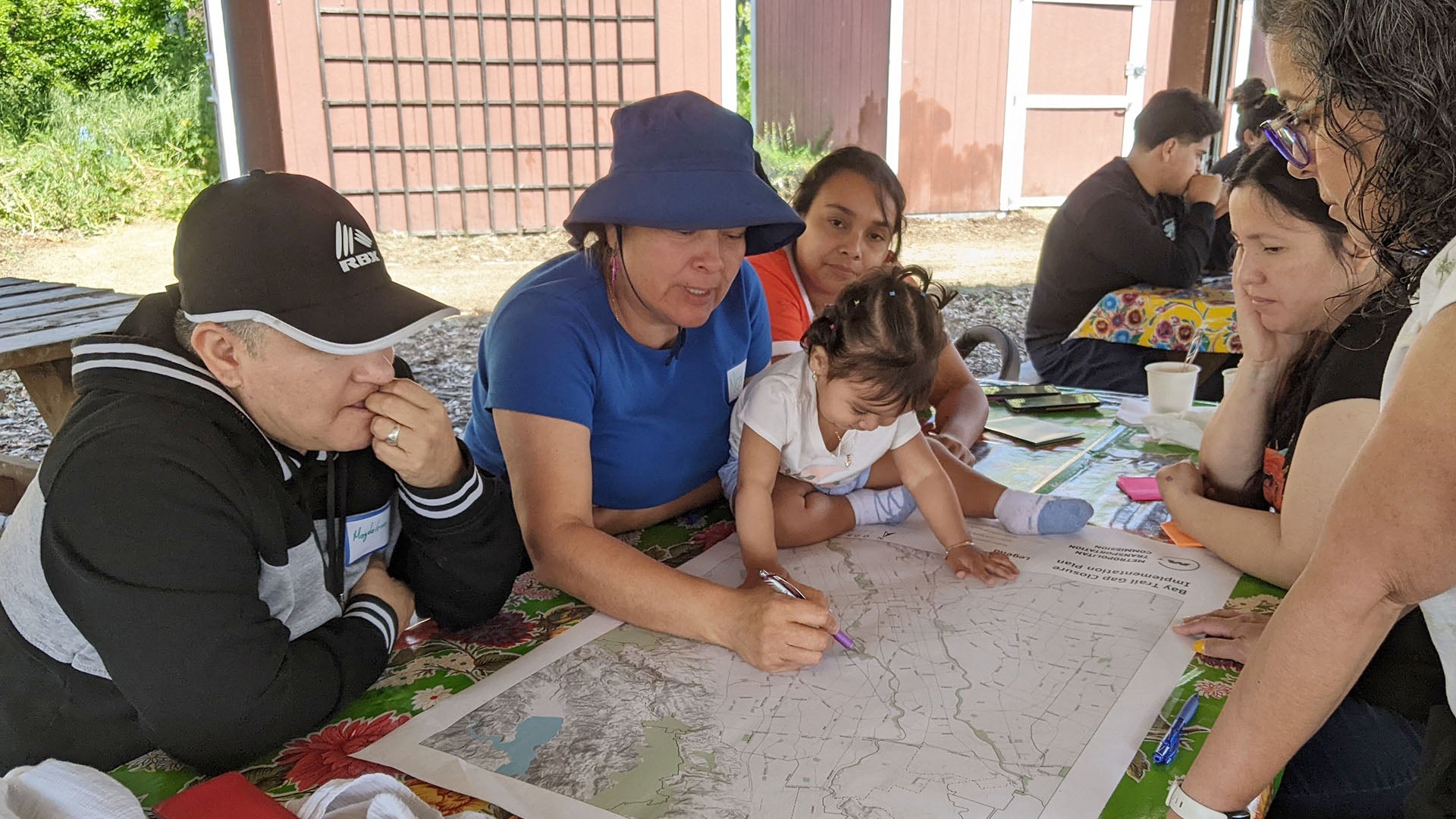
The $29 million Community Action Resource and Empowerment (CARE) program represents a shift in the way MTC works with community-based organizations (CBOs). In the past, MTC has distributed grant funding for specific projects and has worked with CBOs on community engagement efforts.
The CARE program is focused on community-led transportation, housing and environment solutions. CARE works with CBO staff providing resources to build community capacity. CARE offers technical assistance and is a community leadership development and collaboration program: a space for mutual learning amongst Bay Area CBOs facing similar challenges, and between CBOs and government staff. All this so that we can collectively better serve our communities, deliver results and make lives better for everyone. This bottom-up approach enables CBOs to grow, both supporting the people they serve directly and the Bay Area as a whole.
CARE Program Goals
- Strengthen partnerships to advance delivery of transportation projects that positively impact communities
- Broaden civic engagement and build community power to improve lives for all
- Support leadership and practices that can improve transportation for older adults, people with disabilities, youth and communities with lower-income residents
Three Program Components
The CARE Program is broken into three mission-aligned and separate tracks of work. View details of each in the accordions below.
| Component | Description | Timeline | Status |
|---|---|---|---|
| Component 1 | Community Power-Building and Engagement Grant and Learning Lab |
Launched Late 2025
|
|
| Component 2 | Funding Program: Project Development Technical Assistance for Community Based Transportation Plan or Coordinated Plan projects | February 2026 | Guidelines approved by the Metropolitan Transportation Commission. County transportation agencies implement the program. |
| Component 3 | Participatory Budgeting Process and Project Implementation for High Priority Neighborhood-Level Projects | Guidelines to be approved May 2026. | Component details in development. |
Details of the Three CARE Program Components
Component 1: Community Power-Building & Engagement Grant and Learning Lab
CARE Component 1 launched in 2025. The Program of Projects for the $2.5 million Pb+E grant program was approved by the Metropolitan Transportation Commission at its November 19, 2025 meeting and January 28, 2026 meeting. Component 1 is comprised of a grant program and a Learning Lab. More information is available on the Pb+E grant webpage.
Grant Program
26 projects sponsored by Bay Area CBOs were selected for grant awards as a result of a competitive application process. Grants up to $50,000 per project for capacity building; up to $100,000 per project for multi-sector partnership and collaboration development; and up to $250,000 per project for community projects. Grantees will have access to coaching, technical assistance and peer-to-peer learning opportunities.
See the list of the grantee awards.
Learning Lab Program
Up to 20 organizations will be selected through a competitive application process to participate in the Learning Lab. They will receive a stipend of $20,000 per organization. Participants will receive coaching, technical assistance and targeted training to support the development of projects that advance Pb+E goals.
More information is available on the Pb+E grant webpage.
Component 2: Funding Program: Technical Assistance for Community-Based Transportation Plan or Coordinated Plan Projects
On February 25, 2026, the Metropolitan Transportation Commission adopted the Community-Based Transportation Plan Technical Assistance (CBTP TA) Program Guidelines, which are included in Appendix 3 of MTC Resolution No. 4604.
Project nomination processes are currently underway at the county level. The resources below are provided to support project sponsors and other stakeholders throughout the project nominations process.
- CBTP TA Guidelines
- CBTP TA and PBI Base Application Template
- CBTP TA and PBI Project Screening and Evaluation Template
- Complete Streets Portal and Checklist
See additional information on Community-Based Transportation Plans.
Component 3: Participatory Budgeting Process & Project Implementation for High Priority Neighborhood-Level Projects
On May 27, 2026, the Metropolitan Transportation Commission adopted the Participatory Budgeting and Implementation (PBI) Program Guidelines, which are included in Appendix 4 of MTC Resolution No. 4604.
Project nomination timelines may vary by county based on a phased approach. The resources below are provided to support project sponsors and other stakeholders throughout the project nominations process.
Mailing List
- Sign up for the general CARE program mailing list.
- Sign up to for the CARE Pb+E mailing list.
The CARE program expands MTC's community-based investment approach by building on the Lifeline Transportation Program, which serves Equity Priority Communities and similar designations. CARE prioritizes the needs identified by individual Bay Area communities in their Community-Based Transportation Plans, the Coordinated Public Transit-Human Services Transportation Plan, or similar local or county plans.
In 2023, MTC initiated a Call for Interest process to help shape the CARE program and to better understand community organizations' needs for technical assistance and capacity building. This process informed development of the program's funding guidelines, approved in November 2023 through MTC Resolution 4604. These guidelines describe the funding available as well as the rules around areas eligible for federal funding through the One Bay Area Grant (OBAG) program and those eligible for state funding through the Regional Early Action Planning (REAP 2.0) grant program.
Across the nation’s transportation sector, movements have been and are taking place to strengthen community engagement and standardize inclusive processes. These efforts are in response to growing public demand for transparency, accountability and more collaboration directly with communities.
“Participatory grantmaking” invites community-based organizations and other “on the ground” stakeholders to help prioritize where funds should be spent, to help determine the priorities for transportation and mobility within local communities. These stakeholders help set priorities, develop strategies and are directly involved in how funding decisions are made. The approach shifts power in grantmaking decisions to the people most affected by the issues.
MTC’s participatory grantmaking considers the following core elements in its practice:
- It is values-based;
- Involves community in the grantmaking process;
- Application and reporting processes are simple and relatively flexible and transparent; and
- Builds and strengthens larger collaboration efforts.
The Community Advisory Working Group (CAWG) was responsible for providing input and feedback to inform Power-building and Engagement (Pb+E) components of the CARE Program, including:
- Process for outreach, applications and Pb&E focus areas.
- Questions and/or prompts included in the call for applications for Pb+E.
- Criteria and scoring rubric for Pb+E.
- Capacity and technical assistance needs to foster partnerships across sectors and community engagement in housing, transportation and well-being initiatives.
- Framework for evaluating and learning from the initial round of Pb+E applicants.
MTC facilitated meetings and gathered input from the CAWG, while MTC made final decisions on program design and implementation.