


Next Generation of Planners Wrap Up Data Exploration Projects
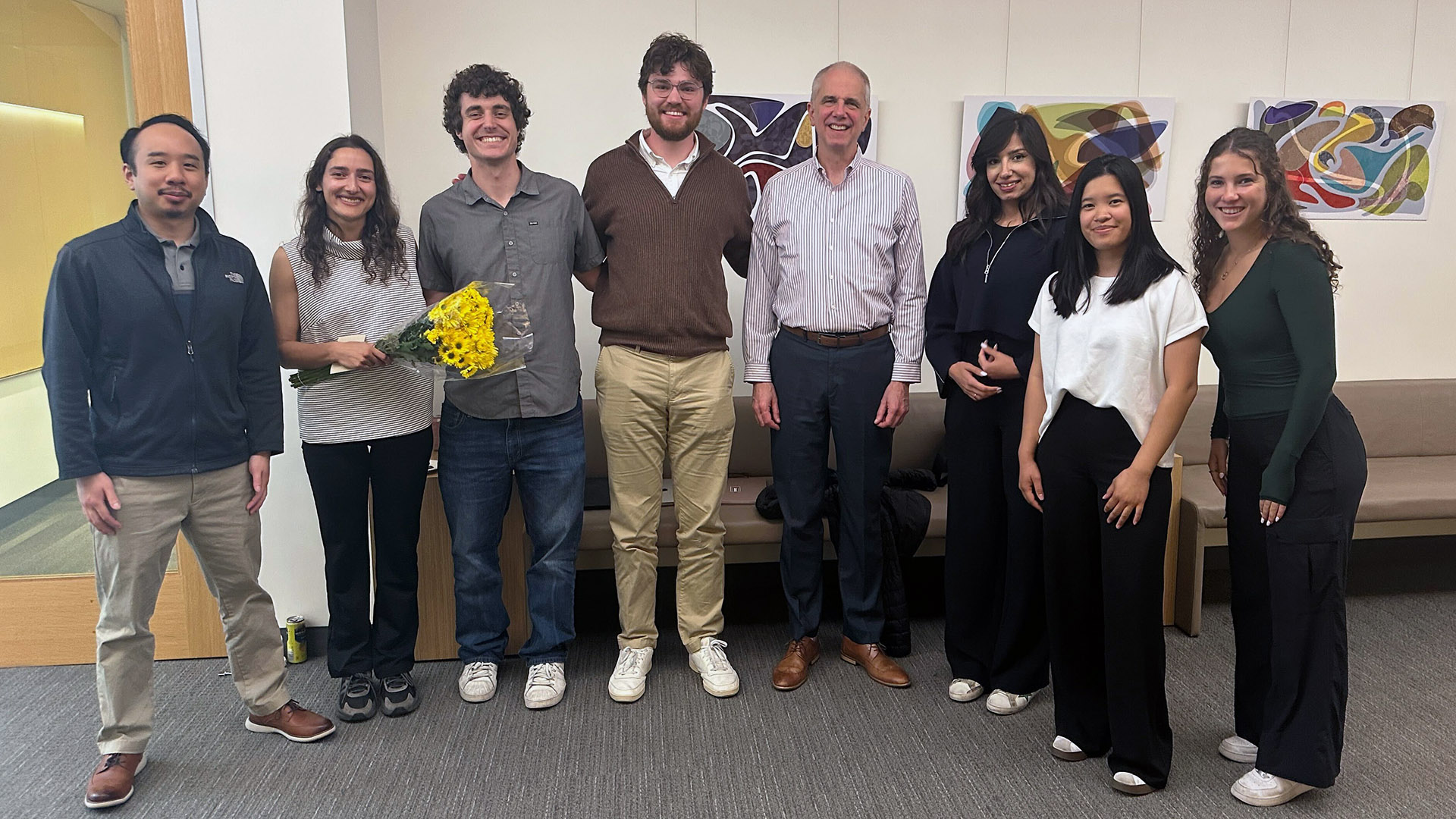
Elliot Huang (MTC), Kaya Tollas (MTC), Patrick Crouch (USF), Jack Dawson (USF), Barry Roeder (BAHFA), Niki Naderzad (USF), Yancy Castro (USF) and Jenna Rashkovsky (USF)
Data science graduate students from the University of San Francisco presented capstone projects from their nine-month 2025-2026 practicum program. The five-person cohort worked closely with mentors from MTC’s Data Strategy and Analytics section, where they gained real-world work experience and looked at MTC’s data through a fresh perspective.
"This program shows how connecting ambitious students and teams with meaningful opportunities leads to real world impact,” says Kaya Tollas, MTC staff data scientist. “Partnerships like this not only inspire the next generation of curious, responsible citizens to consider public service, but also strengthen MTC’s partnerships and connections with the community by building capacity to explore ideas and create new tools to better serve the Bay Area.”
Students investigated key priorities from MTC’s broad portfolio of Bay Area concerns. Across four projects, the cohort developed data tools to increase organizational capacity. They examined how artificial intelligence (AI) could streamline document review and support more efficient planning. The projects – on transportation, housing and the environment – are highlighted below.
Building a Shared Traffic Safety Data Platform
One of several student teams helped improve MTC’s traffic safety data platform by bringing a consultant-managed incident data pipeline – supporting the Traffic Incident Management System (TIMS) tool – in-house.
The new solution provides planners with shared access to granular accident trends, high-risk locations and key safety metrics. MTC, Caltrans, the California Highway Patrol (CHP) and first responders can now make better-informed and better-coordinated decisions to prioritize of roadway improvements.
In addition to supporting retrospective analysis, the platform now enables predictive analytics that can help identify future risks and guide proactive safety planning to reduce traffic accidents.
Comparative Data for Bridge Bicycle/Pedestrian Paths
MTC's Bridge Paths Counter Data offer counts for bicycle and pedestrian traffic on the five state-owned Bay Area toll bridges that have bicycle/pedestrian paths. There is not currently a single in-house dashboard that allows comparative analysis across multiple bridges. Students investigated a better way to pull and process data that is reliable and allows for cross-bridge analysis.
While this work is not yet public, it has laid the groundwork for a future dashboard. MTC will have greater data flexibility, accelerating innovation while reducing reliance on external vendors for future improvements.
Planning for Sea Level Rise Protections
The Bay Conservation and Development Commission (BCDC) is leading regionwide sea level adaptation efforts. BCDC’s Regional Shoreline Adaptation Plan (RSAP) is a framework that guides how Bay Area shoreline communities will plan for rising tides. The first step in the RSAP is to review and summarize existing sea level rise adaptation plans. This will become a shared baseline for existing shoreline conditions and local and subregional adaptation plans.
This USF team, working with MTC and BCDC staff, used off-the-shelf AI tools to create a simple, repeatable workflow that any city staff member can use to summarize existing adaptation plans. In this project, the team created automated summaries for the City of San Rafael and shared learnings on how government agencies can responsibly use AI-assisted workflows for specific tasks with successful results. The project demonstrates how these tools can be worthwhile and valuable for the regionwide effort.
Evaluating Affordable Housing Demand
The Bay Area Housing Finance Authority’s Doorway Housing Portal aims to provide a central source of available affordable housing units in the Bay Area. Before this USF team completed their project, MTC staff could not easily answer simple but important questions about platform users, such as:
- Who is applying for affordable housing?
- Where are they looking for housing?
- What unit types are they looking for?
The first step to answering these questions is to make the data available for MTC staff to analyze. A key concern is the privacy of website visitors and those applying for affordable housing but throughout the automated process, personally identifiable information (PII) is redacted or aggregated for privacy. This anonymized information is then delivered to a dashboard for MTC staff analysis. This means faster access to information and answers to important questions that can help shape the landscape for affordable housing in the Bay Area.
About the Partnership
The 2025-26 Data Dons represent the eighth cohort of USF students to team with MTC as part of the practicum program. MTC Data Strategy and Analytics staff are already working to identify projects for the next wave of program participants.
Submit your comment
In order to receive a reply to your comment, please provide an email address.